HOME » Blog » 10 Common Questions from Foreigners When Purchasing Real Estate in Vietnam (Part 2) -- Market Conditions, Ownership Rights, Registration, Required Documents, Taxes, etc.
Blog
10 Common Questions from Foreigners When Purchasing Real Estate in Vietnam (Part 2) -- Market Conditions, Ownership Rights, Registration, Required Documents, Taxes, etc.
Update: 10/15/2025
1. What is the current situation of real estate purchasing and investment in Da Nang, Vietnam?
Vietnam -- one of the fastest-growing countries in Asia -- opened its real estate market to foreign ownership with the amendment of the Housing Law in July 2015. In 2022, Japan ranked second in Vietnam's foreign direct investment (FDI) inflow with USD 4.558 billion, following Singapore's USD 4.620 billion. By sector, real estate investment ranked second with USD 2.874 billion.
<Da Nang's Market Thrives with Tourism and Investment>
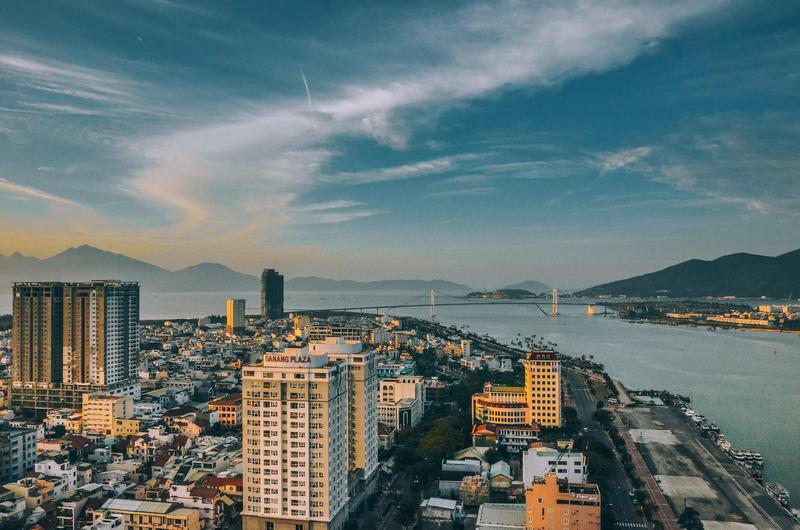
As the third-largest city in Vietnam after Hanoi and Ho Chi Minh City, Da Nang has gained significant attention from international tourists and foreign property investors. Numerous development projects are underway -- for example, the Da Nang Mikazuki Hotel Project with a total investment of approximately USD 168 million. The number of properties available for foreign purchase has also been increasing.
With its growth as a world-class international beach resort, Da Nang's real estate market is expected to continue expanding, driven by:
Increasing foreign individual investment
Entry of foreign enterprises
Rising demand for offices, factories, and industrial land
➡ The Vietnamese real estate market is projected to continue expanding in the coming years.
2. Can foreigners buy real estate in Vietnam?
Yes, foreigners can purchase real estate in Vietnam. However, since all land in Vietnam is owned by the State, foreigners cannot own land itself. Instead, they may acquire land-use rights for a fixed term along with ownership of the building.
<Foreign Ownership Term: 50 years + One Renewal of 50 Years>
The standard land-use term is up to 50 years, renewable once for another 50 years, allowing for up to 100 years of ownership. For foreign-invested enterprises, ownership is valid within the term of their investment certificate.
Land classified as national defense zones, such as beachfront properties in Da Nang, is subject to different ownership regulations, and most are available only as long-term leasehold properties.
Similar to other Asian countries such as China, Thailand, Malaysia, and Singapore, foreigners cannot own land in Vietnam. While foreigners in some countries can purchase land through corporate entities, Vietnam does not allow foreigners--individuals or organizations--to purchase land directly. However, foreign-invested companies in Vietnam can lease land for investment purposes.
3. What types of properties can foreigners purchase and own?
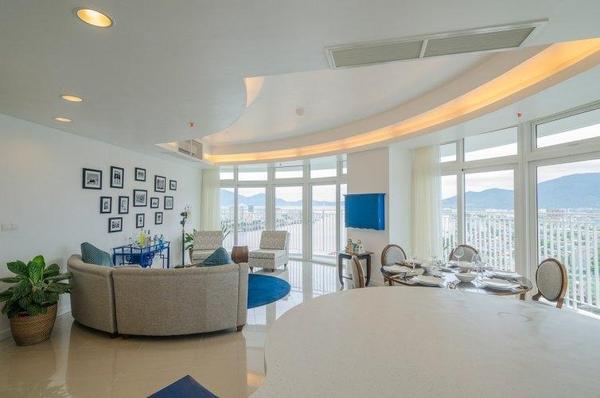
Foreigners are generally allowed to purchase new or pre-owned apartments and condominiums in Vietnam. However, there are ownership limits:
In any single apartment building, foreigners may own up to 30% of the total units.
Within a housing project or administrative area, foreign ownership is limited to 10% of total houses or 250 units, whichever is lower.
For inquiries about purchasing or renting real estate in Da Nang, Vietnam, please feel free to contact DVR for assistance.
4. What is the "Pink Book" in Vietnam? Can foreigners register ownership?
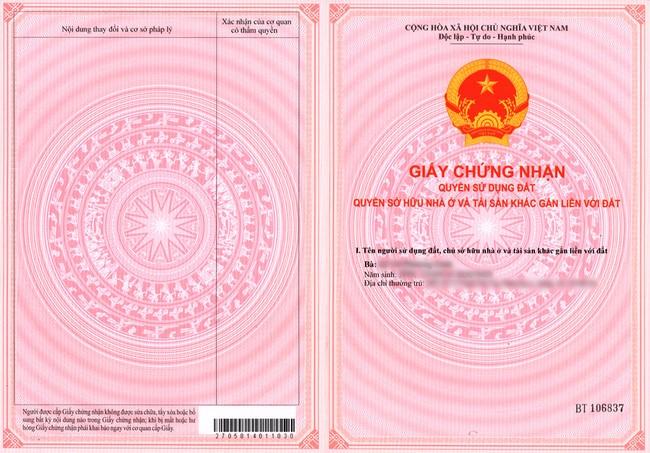
The "Pink Book" is the Certificate of Land Use Rights and Ownership of House and Other Assets Attached to Land, which serves a similar role to the real estate registration certificate in Japan.
In Vietnam, foreigners are also allowed to register property ownership. According to the Housing Law, when foreigners legally own a residential property, they are issued a certificate confirming the land use rights, ownership of the house, and other assets attached to the land.
This certificate is a legal document verifying the right to use the land and the ownership of the structure built on it, and it includes details about land use conditions and property information.
<Contents of the "Pink Book">
The Pink Book is issued together with the Certificate of Land Use Rights for the property. Since foreigners cannot acquire land use rights alone, when purchasing a house, the Pink Book includes both details about the property and partial information about the associated land use rights.
It is also required when acquiring land use rights for business purposes. If the land user and the building owner are different entities, separate Pink Books will be issued for each.
<Information Included in the Pink Book>
Land user, house owner, and owner of other assets attached to the land ※ Includes the original owner's name, business registration number, address, etc.
Land plot, house, and other attached assets
Land plot: Address, area, usage purpose, duration, and legal basis.
House: Details of the building on the land.
Other constructions: Such as factories or non-residential buildings.
Planted production forest
Perennial plants
Map of the land plot, house, and attached assets ※ Includes drawings or diagrams of the property and land.
Changes after the issuance of the certificate ※ Lists any modifications in ownership or usage rights after issuance and their corresponding dates.
5. What is the difference between "ownership rights" and "land use rights" in Vietnam?
In Vietnam, land is owned by the State, while buildings and structures on the land can be owned by individuals or corporations. Unlike Japan, where there are "ownership rights," "leasehold rights," and "use rights," in Vietnam, the distinction lies between owning real estate and using land.
<Ownership rights: for purchasing and owning residential property>
This refers to the rights granted to foreigners or foreign-invested enterprises to own real estate. Although there are restrictions on ownership duration and number of units, foreign individuals may register ownership and lease out the property, as recorded in the Certificate of Land Use Rights, House Ownership, and Other Assets Attached to Land.
<Land use rights: for factories or commercial developments>
This refers to the temporary right to use Vietnamese land, granted or leased by the Vietnamese government, mainly for industrial or large-scale commercial facilities. The standard term is 50 years, extendable up to 70 years under certain conditions.
<Condotels and villas in coastal areas>
Most condotel and villa projects in beach areas, which are considered strategic national defense zones, are developed under leasehold land use rights. Buyers purchase under a long-term lease agreement with the developer rather than outright ownership.
6. What documents are required when buying or selling a house in Vietnam?
When purchasing a property in Vietnam as a foreigner, you are required to prepare several documents. Make sure you have the following paperwork related to real estate transactions:
Valid passport and visa for entry into Vietnam
Residence certificate or proof of address
Proof of funds or a valid bank statement
Certificate of ownership
Certificate of ownership registration
Certificate of land use and construction
Business registration certificate for land use and construction (for companies)
Sales and purchase agreement
Note: The above list represents general examples of required documents. Please confirm the exact list with the developer or licensed real estate brokerage company, as requirements may vary depending on the project.
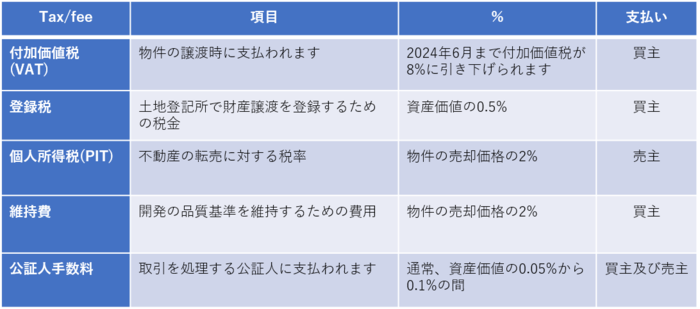
7. What taxes and fees are required when buying a house in Vietnam?
When purchasing a property in Vietnam, several taxes and transaction fees apply. (The specific taxes and fees will be explained in the following section.)
8. How much does it cost to live in Vietnam?
The cost of living in Vietnam varies depending on the area and lifestyle, but overall, it is much more affordable than Japan or Western countries.
On average, monthly living expenses (excluding rent) for a single person range from USD 450 to 600.
Regarding rent, prices differ based on location and accommodation type:
In Da Nang, a studio apartment typically costs around USD 250 per month,
A two-bedroom family apartment ranges from USD 400 to 1,000 per month.
Food expenses are also very reasonable:
Local dishes such as pho or banh mi cost around USD 1,
A meal at a popular Vietnamese restaurant ranges from USD 15 to 18,
At a Japanese restaurant, a katsudon bowl costs around USD 7.
9. How much are housing prices in Da Nang, Vietnam?
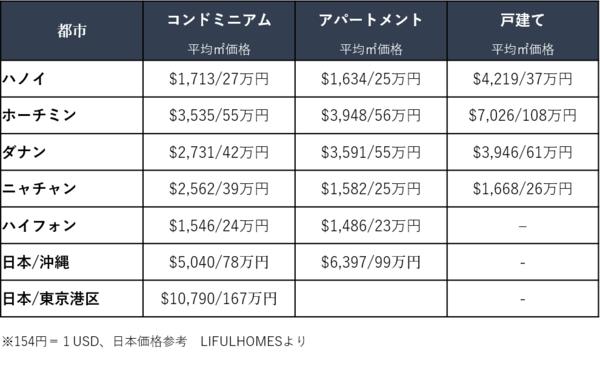
Housing prices in Vietnam vary by area, property type, layout, size, and age. Except for the sharp market decline in October 2022, property prices have been steadily increasing over the past decade.
Major cities such as Hanoi, Ho Chi Minh City, and Da Nang are among the most expensive in terms of both rental and purchase prices for apartments and condominiums.
Recently, coastal and resort areas such as Vung Tau, Phan Thiet, Phu Quoc, Nha Trang, and even Hai Phong and Da Lat (a popular highland retreat) have seen rising demand and prices among Vietnamese buyers.
Currently, apartment and condominium prices in Da Nang are approaching the levels of new and pre-owned properties in prime resort areas of Okinawa, Japan.
10. What Are the 5 Common Risks for Foreigners When Buying a House in Vietnam?
Even when purchasing property in one's own country, there are many risks -- and the same applies when buying real estate abroad. For those who already own or have previously purchased overseas property, you may be familiar with the key points to consider. However, for first-time buyers of overseas real estate -- especially in Vietnam -- it is essential to conduct thorough due diligence, consult with local real estate experts, and, if the purchase is related to business expansion, seek the support of a legal advisor well-versed in foreign corporate law. It is also crucial to stay informed about frequent changes in Vietnamese laws, as well as developments in the real estate and financial markets, since these factors can significantly impact your investment. Below are the main risks that foreigners face when buying property in Vietnam:
1. Legal risks: Changes in regulations can directly affect the real estate market. Therefore, comprehensive legal and property due diligence is indispensable.
2. Land disputes: Properties with unclear ownership or incomplete land use documents may lead to legal disputes, transaction delays, cancellations, or, in the worst case, the loss of funds already paid under the purchase agreement.
3. Fraud and corruption: Foreign investors should be cautious of scams involving falsified ownership documents or misleading information about the property.
4. Lack of transparency: Incomplete paperwork or limited transparency in property details--such as payment terms, handover schedules, or guaranteed returns for condotels--may result in transaction failures or difficulty recovering investment funds.
5. Communication barriers: Differences in language and culture can create challenges during the purchasing process. Consulting with a reliable local real estate agency that holds an official brokerage license and offers multilingual support (in Japanese, English, Chinese, etc.) can help minimize misunderstandings and ensure smoother transactions.
Inquiries for Real Estate Purchase in Da Nang
At DVR (Da Nang Villa Realty), we provide listings for almost all types of real estate in Da Nang City and surrounding areas, including condominiums, serviced apartments, offices, and retail spaces. We will introduce properties tailored to your needs -- whether you are relocating, on an overseas assignment, moving to Vietnam, or expanding your business. Please feel free to contact us by email, LINE, or phone with your preferred area, budget, size, and layout.
At DVR, we have a licensed Japanese real estate agent on site, along with two Vietnamese staff members who can communicate in Japanese and English. For real estate rental and sales brokerage in Da Nang, trust the experienced team at Da Nang Villa Realty.